
Written by Isobel Farquharson
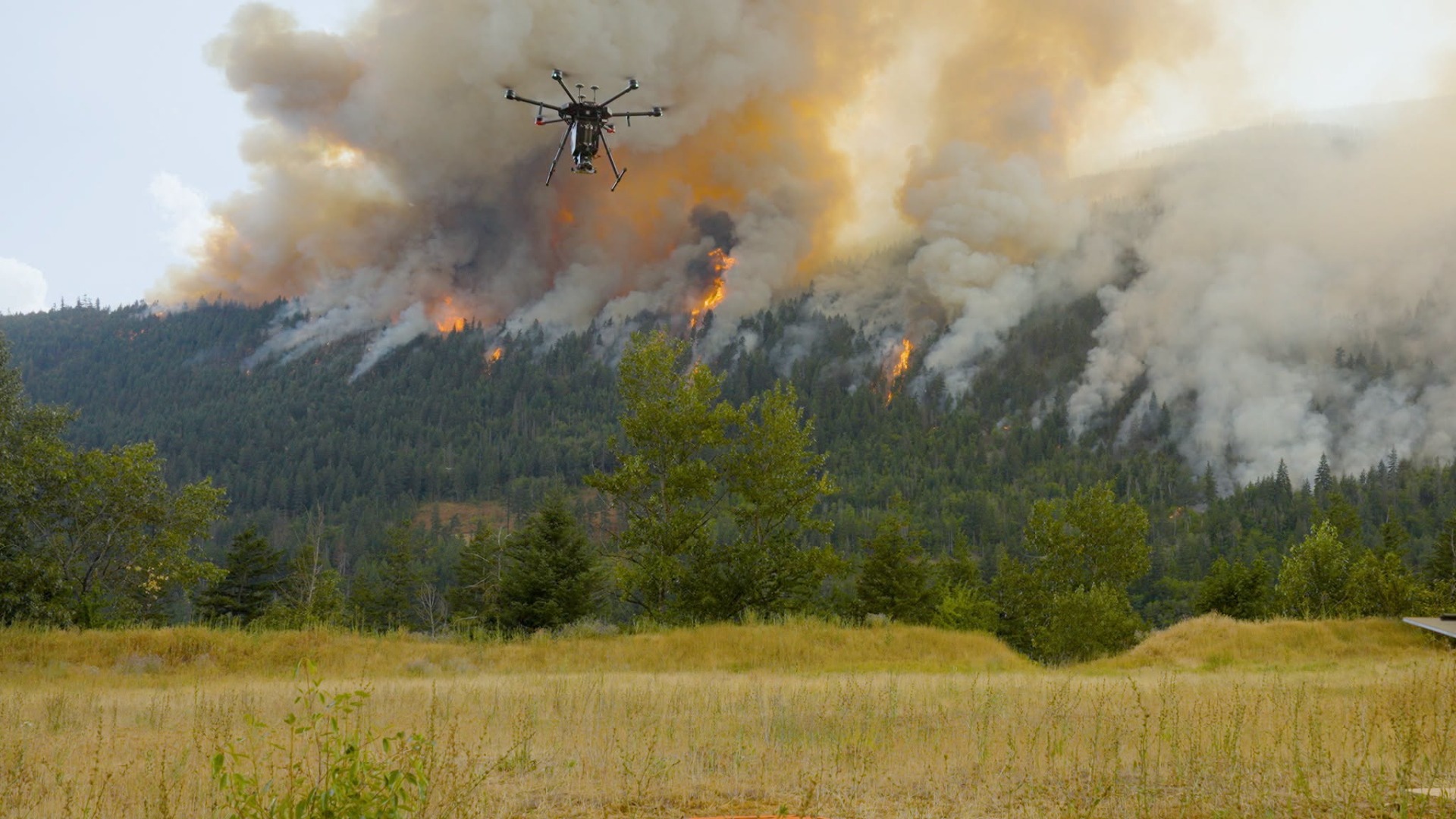
The oppressive sepia skies above North American cities this summer are all too familiar to Canadians who have grown unwillingly accustomed to intensifying wildfire seasons.
The hot, dry conditions forecast for BC could see another challenging week amid an already devastating season.
Canada is warming twice as fast as the global average and is home to more than a quarter of the world’s boreal forests, making it especially vulnerable to wildfires as heatwaves become longer, hotter and more frequent.
A handful of Canadian startups are developing novel solutions to the country’s worsening wildfire problem.
Backed by federal grants, provincial funds and private climate-tech investors, these firms are creating technologies to prevent fires before they start and detect them more intelligently when they do.
While traditional methods of firefighting will remain essential, new approaches for wildfire prevention, detection and mitigation could help ease the burden on thinly stretched firefighting teams.
“Wildfire risk is no longer seasonal, it’s structural,” said Sarah Goodman, president and CEO of NorthX, a Vancouver-based investor in early-stage “climate hard-tech” companies.
Stopping wildfires before they start
Faulty power lines cause about 10 per cent of wildfires in Canada, according to entrepreneur Brittany Courvoisier-Nicol.
Her company CRWN.ai has developed a small, iPad-sized sensor that can be installed on transmission towers to monitor the frequencies emitted by power lines and detect when an outage is likely to occur.
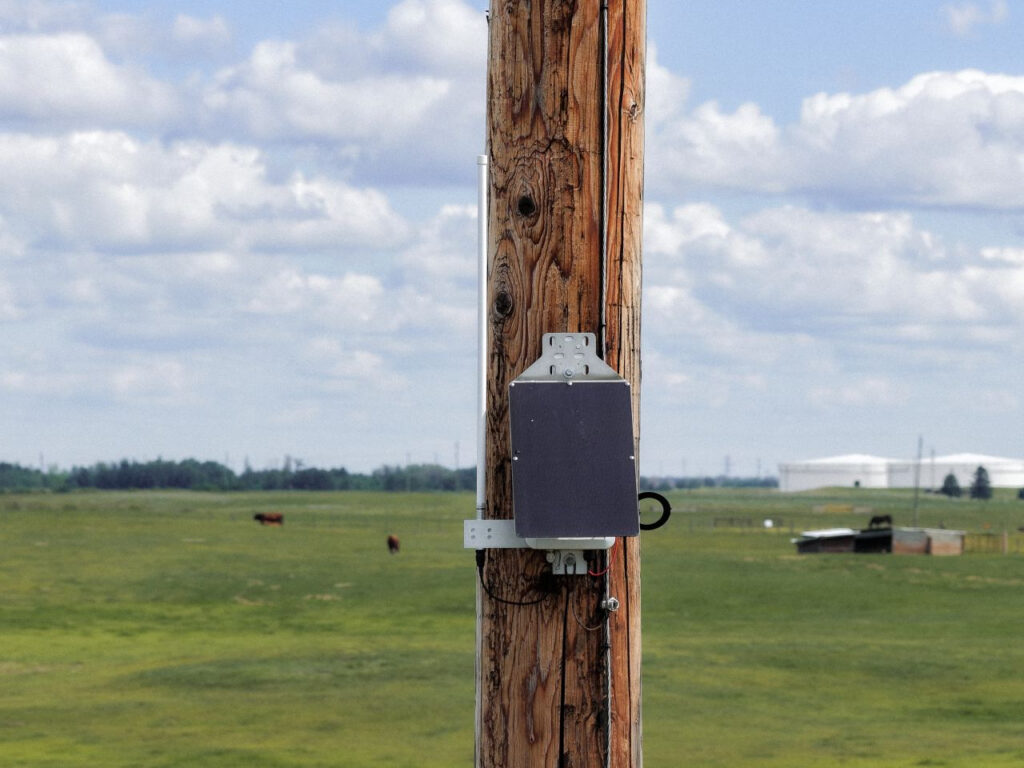
“It sits on a power pole and constantly listens,” Courvoisier-Nicol, CRWN’s co-founder and head of product, told Canada’s National Observer.
The technology company is based in Kelowna, a city in the BC interior known for its sunny, dry climate, making the area ideal for wine production but no stranger to wildfires. The 2023 wildfire in McDougall Creek in West Kelowna was one of the region’s worst, burning almost 14,000 hectares and forcing the evacuation of more than 35,000 residents.
“We have our to-go box that’s ready because we’ve been evacuated three times now,” said Courvoisier-Nicol, a longtime Kelowna resident. “We know exactly where it is, what to grab and when to grab it. You don’t have to be a data scientist to recognise the pattern.”
While lightning strikes and human actions cause most wildfires, Canada’s 180,000 km of transmission lines are a serious threat.
When transmission lines age they become more prone to electrical faults, leading to “electricity leaks” or sparks, which can cause wildfires. Because so many transmission lines are in remote locations, fires caused by these sparks can spread for a long time before teams reach them.
Replacing all aging power lines is a big task that will take years. CRWN’s technology helps to focus attention and prioritise those most likely to cause imminent harm.
“Based on the frequency that the transmission line is making, you can tell years, months, days ahead of time if it’s going to start a fire due to the sound signature that it’s making,” Courvoisier-Nicol said.

When a frequency is detected that suggests a power line is at risk of failure and potential sparking, the utility company is alerted in real-time so it can send a team to fix the lines before the critical stage is reached.
“Where we’re really diferent is everything [is] pre-spark…we work on the prediction side of things,” she said.
Canada has more than 180,000 km of transmission lines, many of which are aging and degrading.
Because the task of replacing all aging power lines is simply too big, CRWN wants to focus attention and prioritize those most likely to cause imminent harm.
The company is currently under contract with three utilities across Canada. Its funders include Emission Reduction Alberta, the BC Fast Pilot Program, early-stage investor NorthX and BC’s Innovative Clean Energy fund.
In June, CRWN hired Troy Connolly, a veteran BC manufacturing executive, to lead the “move from pilot to global scale,” with an eye on wildfire-prone countries in Europe and Australia.
“But that gap from the million-dollar projects to the $10 million commercialisation is a large gap,” Courvoisier-Nicol said. “So that’s the one that we’re working on right now. And there isn’t a tonne of funding around that.”
Before lightning strikes
Lightning causes 50 to 60 per cent of Canadian wildfires, but accounts for more than 90 per cent of the area burned.
As the climate continues to change, researchers project that lightning strikes will increase, and a lower snowpack, drier land and higher temperatures will raise the odds that those strikes ignite fires.
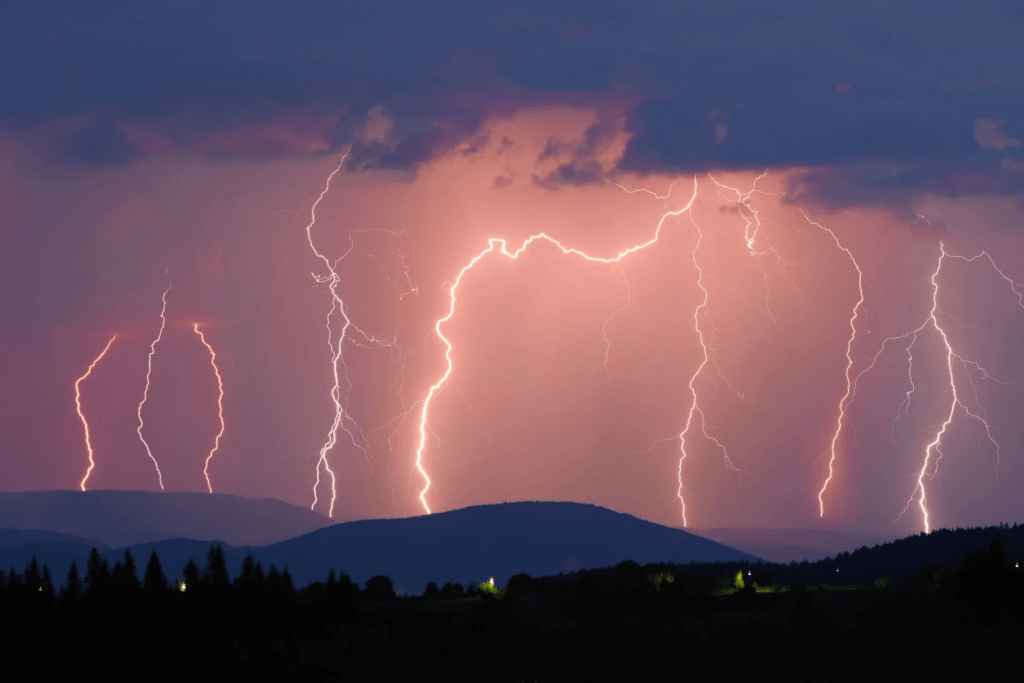
Vancouver-based Skyward Wildfire Technologies uses proprietary weather forecasts to predict where lightning is likely to strike and ignite fires. It then dispatches aircraft to release small, targeted amounts of a “lightning reduction material” into high-risk storms.
“Each intervention is scoped to specific storms, on high-risk days,” the company said on its website. “It isn’t designed to alter rainfall, regional weather or climate.”
This combination of AI weather modelling and aerial intervention is designed to complement existing tools such as controlled burning, fuel management and suppression, easing pressure on firefighting crews.
By reducing the number of fires during peak storm events, Skyward hopes to free up crews to respond more efectively to the fires that do start.
The company conducted its first field trial earlier this year, backed by up to $1 million in funding from BC’s Integrated Marketplace program to assess the efectiveness of its lightning-caused wildfire prediction and reduction technology.
“Wildfire agencies need more tools to help reduce risk on the highest-consequence days. This project is an opportunity to evaluate our approach in real-world conditions as part of broader wildfire-preparedness and prevention eforts,” Skyward CEO Sam Goldman said in a May press release announcing the funding.
Skyward also raised $7.9 million in a seed funding round earlier this year led by Climate Innovation Capital (CIC), a Toronto-based venture fund.
“Mitigating the exponentially increasing risk of wildfires can only happen if we shift from reactive suppression to proactive prevention,” CIC managing partner Kevin Kimsa said.
Still, questions have been raised about Skyward’s technology.
Finding fires faster
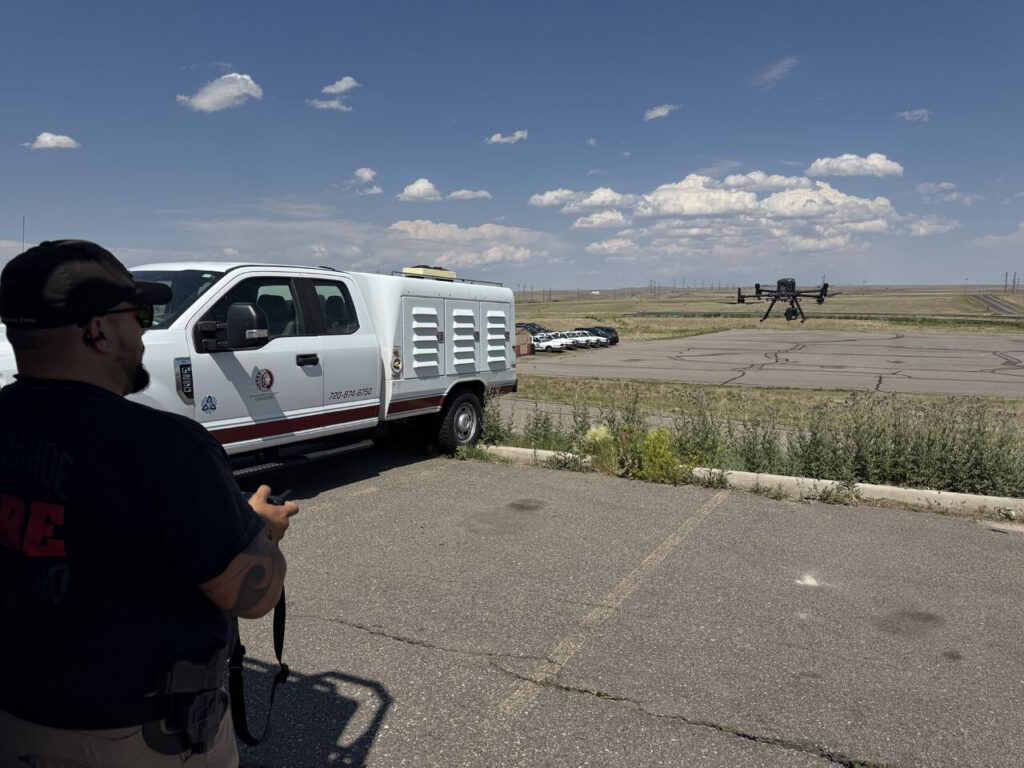
On the detection side, Victoria-based Nova ofers drone mapping software that uses machine learning to turn data provided by drones into insights and alerts that allow fire crews to quickly detect wildfire hotspots without the need for manual interpretation.
This helps crews to make faster and safer decisions on how to respond to high-risk areas and active fires, and allocate resources more efectively, said Robert Atwood, the company’s CEO.

Atwood started his career on the frontlines as an initial attack wildfire fighter with the BC Wildfire Service.
At the time, Atwood and his colleague Richard Sullivan got excited about the potential uses of drones in wildfire situations, asking “what can we do to do something we love with something really novel, new and exciting?”
The pair went on to co-found Hummingbird Drones in 2014, combining their understanding of wildfire behavior with knowledge of existing fire management systems to transform how wildfires are monitored, understood and managed.
“Flying drones is the easy part,” Atwood told CNO. “Ultimately, what it really came down to was, can you analyze the data? Can you do this efciently and at scale?”
This led to the creation of Nova. “We wondered, with all this data we’d collected on wildfires over the previous X number of years, if we could take that data, and we could build a machine learning model with it.”
Nova now works with around 300 clients in North America, including 26 state forestry agencies and emergency services in the US.
“Many people are just starting their drone programs today. So we’re seeing this incredibly exciting emerging market where there’s a lot of people just getting their feet wet that are learning about the tech, about what it can do,” Atwood said.
However, he noted the diference in uptake between the US and Canada. Despite being a Canadian company, Atwood estimated about 95 per cent of Nova’s business comes from the US.
“It feels like there’s a lot more risk aversion here in Canada to try new things,” Atwood said. “Whereas in the States it’s just such an incredible culture around startups and new technology and risk-taking.”
Despite funding and tax breaks for Canadian startups like Nova, potential domestic clients are often reluctant to be the first to buy into new technologies. “As a result of that, we spend a lot less time trying to sell into Canada,” he said.
While risk aversion is “deeply ingrained” in Canada, Atwood said he believes attitudes will eventually change “in the next generation or two generations.”
Despite a challenging Canadian market, Nova is working with the BC government on its drone program.
It also received $600,000 from NorthX in April to expand from drone-only integration to a multi-platform system that combines data from helicopters, aircraft, satellites and sensors. This was part of a $2.2 million follow-on investment in Nova, CRWN and Skyward.
“What sets these companies apart is that they’re already delivering results in the field, with technologies being validated in real-world conditions with utilities and frontline teams,” said NorthX’s Goodman.