
The world’s largest carbon removal network isn’t being built in a lab—it’s being built in mill towns.
CO280 is pioneering a first-of-a-kind integration of carbon capture and storage (CCS) with the pulp and paper industry—and making the economics work. Unlike CCS for natural gas power plants or cement facilities, CO280 captures biogenic CO2 from woody biomass combustion while mills continue producing essential products like cardboard and tissue.
The process is straightforward: trees absorb CO2 from the atmosphere as they grow, storing CO2 in their biomass. When mills burn biomass residuals as part of the pulp-and-paper-making process, that biogenic CO2 is released back into the air. CO280 intercepts the biogenic CO2 before it reaches the atmosphere and stores it permanently underground. The result is a net-negative carbon effect of carbon dioxide removal (CDR), which means that at the end of the process, there is less carbon in the atmosphere. And because the CCS projects are built into existing pulp mills, CO280 is able to help secure thousands of jobs in the forest products industry.
“What we’re doing at CO280 is turning a waste product into a bankable, scalable climate solution,” says Jonathan Rhone, Co-Founder and CEO of CO280. “We have the opportunity to develop millions of tonnes of CDR while investing billions in the rural mill towns that depend on North American forestry. This isn’t an ‘either/or’ between climate action and economic prosperity, it’s a ‘yes/and.’”
With support from NorthX Climate Tech, CO280 is demonstrating that pulp and paper CCS offers something rare in the voluntary carbon market: a permanent CDR solution that is reliable, scalable, and bankable—one that delivers lasting benefits for both the climate and the communities that depend on these mills.
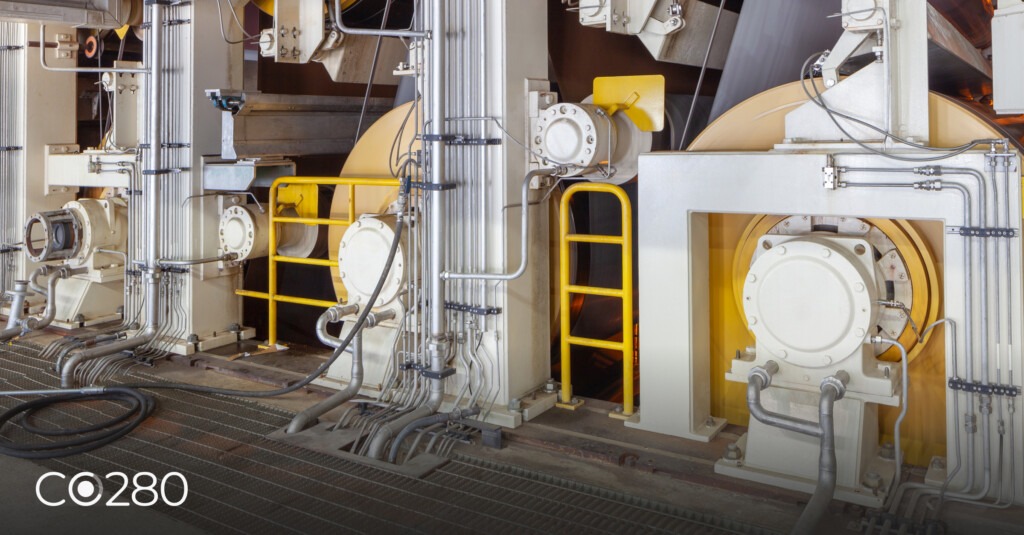
How CO280 is unlocking millions of tonnes of CDR, one mill at a time
Globally, pulp and paper mills emit up to 600 million tonnes of biogenic CO2 annually, with individual mills averaging about 1 million tonnes per year. With over 15 mills in operation across BC, that translates to up to 15 million tonnes per year in BC alone.
This biogenic CO2 originates from managed forests that supply the timber industry, where CO2 continues to be sequestered in long-lived wood products, and the pulp and paper industry, which uses timber residuals such as treetops and sawmill byproducts to manufacture essential products like cardboard packaging.
By retrofitting these pulp and paper mills with modular CCS units, CO280 can capture and permanently store millions of tonnes of biogenic CO2 annually—in BC and beyond.
One of the strongest aspects of CO280’s project model is its repeatability. Kraft pulp and paper mills operate with standardized equipment worldwide—each using recovery boilers that combust biomass and, in the process, emit the same flue gas with a stream of highly concentrated CO2 (approximately 300X the concentration of CO2 in the atmosphere). If you can isolate, capture, and store biogenic CO2 from one mill’s flue gas, you can replicate that process efficiently at any pulp mill around the world.
To put that in perspective: capturing and storing the annual biogenic CO2 emissions from pulp and paper mills worldwide would be the equivalent of taking every passenger vehicle in Canada off the road—five times over.
“Pulp and paper CCS represents one of the most compelling CDR opportunities on the planet,” says Jon. “These mills are already producing concentrated streams of biogenic CO2 at scale. The infrastructure is there, the volumes are there, and the potential to capture and store multiple megatonnes of CO2 is real and repeatable. Every mill we prove out becomes a blueprint for the next.”
The NorthX connection: unlocking CO280’s field pilot
Proving that a first-of-a-kind CCS integration can scale requires more than lab tests or models—it requires real-world testing. For CO280, that proof came from a field pilot at their flagship CDR project at a pulp and paper mill in the U.S. Gulf Coast.
Field pilots are a critical bridge between controlled testing and commercial deployment for engineered CDR. A lab can simulate conditions, but only a live industrial environment can demonstrate how a system performs against the variables that matter: chemical flue gas composition, equipment reliability, energy demands, and the unpredictable realities of weather and temperature.
The challenge is that scoping, building, and operating an industrial field pilot demands significant capital that most early-stage CDR developers simply don’t have. NorthX Climate Tech stepped in to help close that gap. Following a thorough application and due diligence process, NorthX provided the catalytic funding that helped make a first-of-a-kind field pilot possible.
NorthX identified CO280 as a strong investment because they pair proven carbon capture technology with a new industrial application that produces a highly concentrated CO2 stream—significantly reducing execution risk compared to other CDR pathways. The repeatability of the model, with one blueprint applicable to hundreds of mills worldwide, signaled the kind of scalability NorthX looks for when deploying capital at the critical gap between a demonstration project and commercial deployment.
For British Columbia, where the forest products industry supports close to 100,000 jobs in small, rural communities, this work has particular relevance. The province’s mills face growing competitive pressure, and integrating carbon capture offers a path to new revenue streams that can help sustain operations and protect jobs in the long-term. To fully develop this opportunity in BC, investment is required in CO2 infrastructure including pipelines and geologic storage. Beyond the pulp and paper sector, CO280’s approach also demonstrates how carbon capture can be adapted to other emissions-intensive industries in BC—from cement to chemicals—establishing a model for broader industrial decarbonization across the province. But opportunities like these depend on early, strategic investment to get off the ground.
“One of the hardest parts about solving climate change isn’t identifying the right technologies, it’s funding them at the moment when it matters most,” says Sarah Goodman, CEO & President of NorthX. “Without catalytic capital, the most promising solutions are at risk of not reaching their potential. That’s exactly why NorthX exists: to make those bets early, and to help the best ideas become real climate solutions.”
With NorthX’s support in place, CO280 set out to put the technology to the test. Working with SLB Capturi, a leading provider of carbon capture technology, CO280 installed a Mobile Test Unit (MTU) that included all core processes required for a full-scale carbon capture system—including, for example, a carbon absorber of the same height as a full-scale plant to ensure that the pilot would represent realistic industrial conditions.
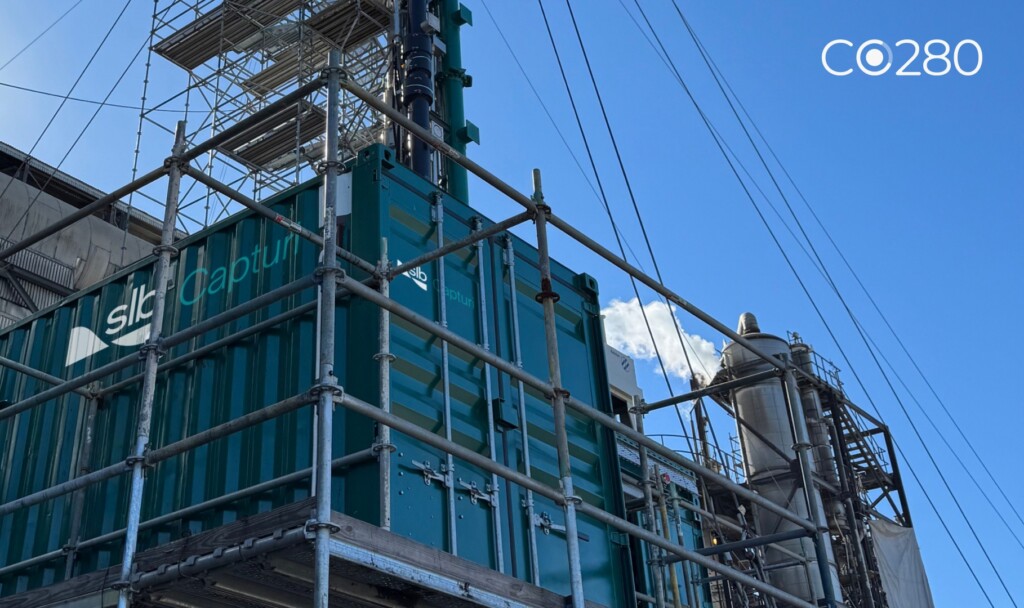
Over the five months of operation that totaled over 4,000 hours, the MTU delivered the following key results:
- 95% capture rate of biogenic CO2;
- Optimal energy consumption;
- Low operational costs;
- Liquid amine solvent durability; and
- Proven mitigation of absorber emissions.
The results were clear: the field pilot was a success. CO280 has proven that CDR from pulp and paper mills is not a distant promise, but a low-risk, near-term solution ready for corporations with serious climate ambitions.
Looking ahead: CO280’s 30 MTPY vision
With pilot validation in hand, CO280 continues to scale with a bold ambition to become the world’s largest supplier of high-quality, permanent, and affordable CDR.
As of March 2026, CO280 has awarded front-end engineering and design (FEED) contracts to their flagship project in the U.S. Gulf Coast and Pre-FEED contracts to additional projects across North America. And across their total project pipeline, CO280 has the potential to remove approximately 30 million tonnes per year of biogenic CO2 emissions.
“The field pilot represents a critical step forward for CO280 in unlocking pulp and paper CCS at the multi-megatonne per annum level,” said Jon. “It is with NorthX’s support that we are able to make pulp and paper CCS a real CDR solution of today—not the science fiction of tomorrow.”
To learn more about CO280, and how pulp and paper CCS can fit into corporate decarbonization strategies, visit: www.co280.com.